


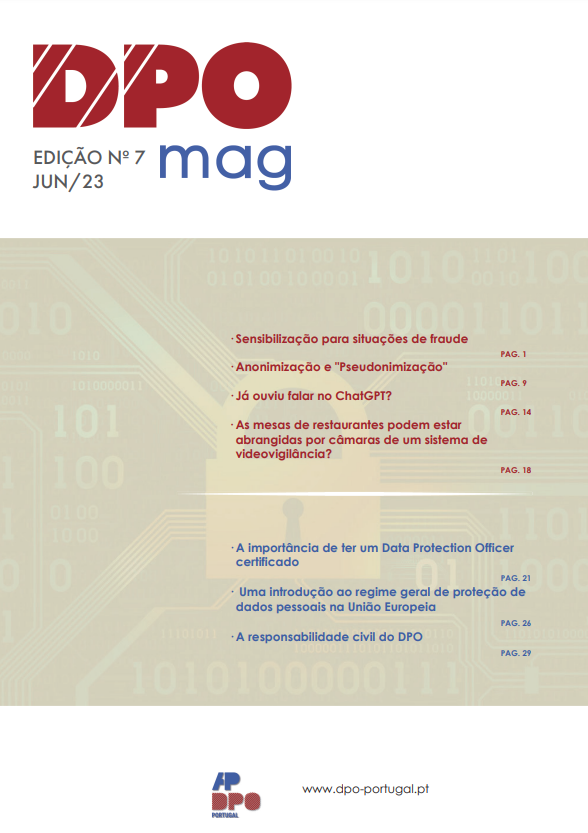
In June 2023, DPO Magazine published an article written by our CEO, Vitorino Gouveia. The article discussed the use of anonymisation and pseudonymisation in the context of data protection. In an increasingly digital world, the protection of personal data is a fundamental issue. Anonymisation and pseudonymisation are two important techniques for ensuring data privacy and security. Since 25 May 2018, when the GDPR came into force, companies and organisations processing personal data within the European Union have been required to comply with its provisions.
Anonymisation renders personal data unrecognisable, making it impossible to re-identify the individual.
Pseudonymisation replaces identifying data with pseudonyms, whilst still allowing for re-identification. In other words, pseudonymisation alone does not guarantee complete anonymisation, and it is possible to link the pseudonym to the individual’s real identity if there is ‘additional information’.
Both techniques offer advantages such as protecting individuals’ privacy, allowing the use of data for statistical and analytical purposes, and facilitating the sharing of data with external organisations.
However, the choice of which technique to use depends on various factors, such as the organisation’s needs, the nature of the data and the resources available. It is important to emphasise that the incorrect application of any technique may compromise data protection. Whilst poorly executed anonymisation may allow individuals to be re-identified, pseudonymisation requires robust measures to ensure the security of the ‘additional information’.
Organisations should be aware of the challenges and best practices involved in implementing these techniques. It may be crucial to consult data protection experts to ensure compliance with the GDPR and the effective protection of personal data.
If you would like to read the full article, please click the button below.